Hot water cylinders are a crucial part of every plumbing system. Needed for day-to-day use, from taking a shower to washing dishes, it is critical that you have a well working energy efficient hot water system in your home. The hot water cylinder needs to be maintained at a constant temperature of 60 degrees celsius to avoid the likelihood of legionella bacteria growth. When turning on your hot water tap, you should receive instant hot water at a good pressure and a constant temperature (no more than 50 degrees celsius at your sanitary fixture).
The two main types of systems which are installed in homes around New Zealand are:
- Low Pressure Systems (open vented)
- Mains Pressure (valve vented)
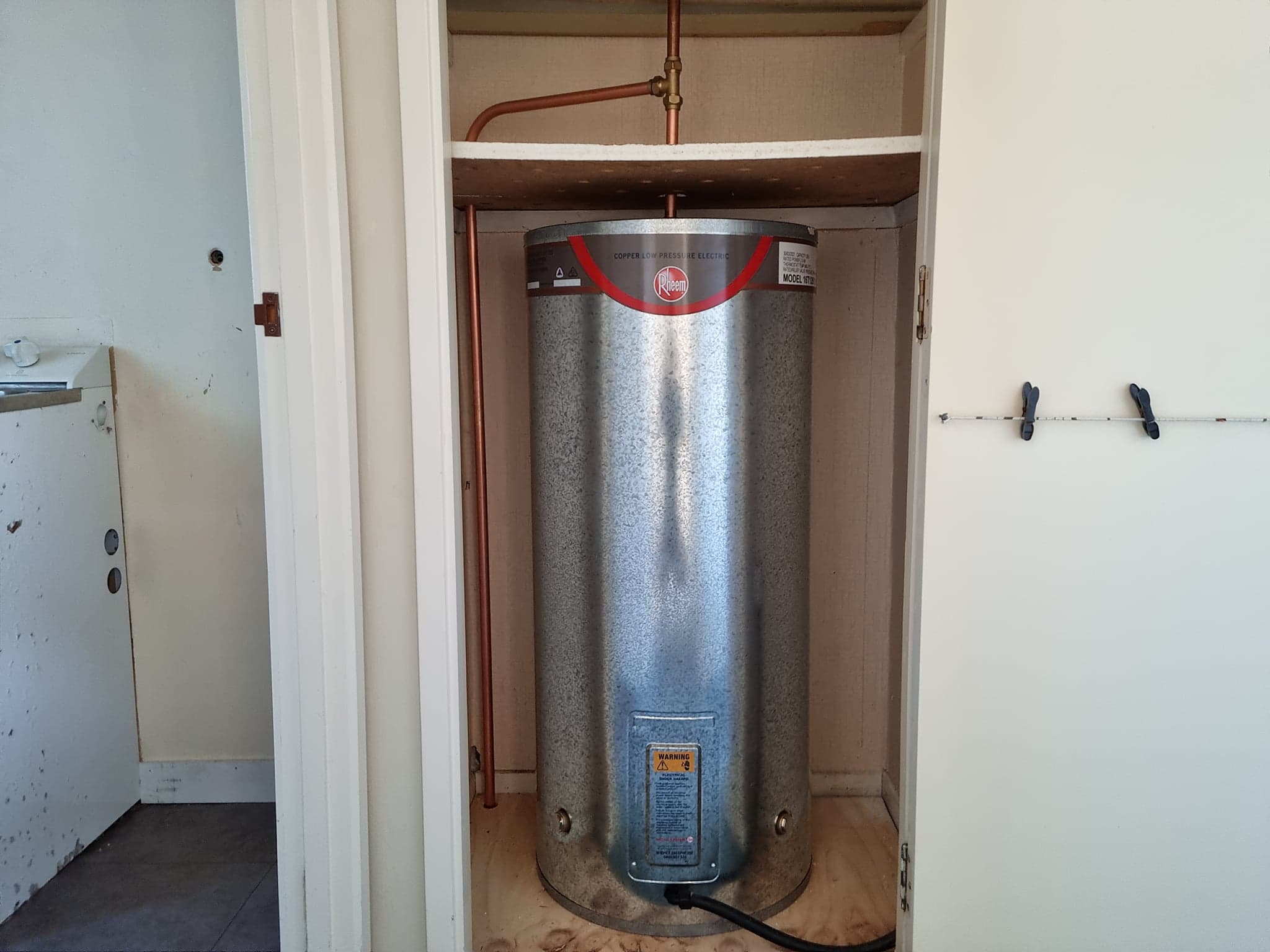
Each of these have their pros and cons. Usually in older homes you will find the classic Low Pressure System. This is easily recognisable by a copper pipe (open vent) sticking out of the roof. Though sometimes if this is not achievable, there will be a relief valve fitted to the vent and the copper pipe will be terminating outside via a wall or over a drain.
The pros to having a Low Pressure System is that the internal cylinder is made from copper, having a long life span and the lower pressure ultimately means a lower water bill.
The cons of having a Low Pressure System is low pressure. This means the hot water flow in your showers, taps and baths is slow. Also, older cylinders will usually have 1 KW element which means it takes longer for the water to reheat compared to the 2-3 KW elements used in modern hot water cylinders.
Mains Pressure hot water cylinders are made from steel which means they can withstand high pressure (similar pressure to your cold water supply). This pressure is controlled by safety valves which let out small amounts of water to release the pressure, hence why you may sometimes see water leaking from your overflow pipe outside.
-
 Portside Plumbing
- March 20, 2021